
🧭 Before you incorporate
Is Bulgaria the right choice for your business?
Not every founder benefits in the same way. Whether Bulgaria works for you depends on where you live, where your business actually operates, who makes the decisions and what you plan to build. That is where this page starts — not with the tax rate.
This page gives you no yes and no no. It shows you which questions your situation raises first, and who should answer them.
Who Bulgaria often works well for
These starting points work well in practice — not because Bulgaria is a trick, but because residence, activity and entity line up.
You're building genuine operations in Bulgaria
When work actually happens locally — an office, employees, customers, suppliers — the structure stands on its own feet. It's the most stable case, because the substance question never really arises.
Your company is setting up a Bulgarian subsidiary
An existing business with a clear operational purpose in Bulgaria has an evident reason for the entity. The discussion then turns on which structure fits, not on whether it's justified.
You're moving your centre of life
If you relocate yourself, residence, management and company come together in one place. That combination sits behind most of the founder stories you'll read on this site.
You're building a team in Bulgaria
Development, support, administration or shared services on the ground — well-qualified people at moderate cost is one of the most realistic reasons for Bulgaria, entirely independent of the tax rate.
You need an EU base with single-market access
For businesses from outside the EU — or after Brexit — an EU entity with VAT registration and the euro is often the actual reason. The low tax rate is then a side effect, not the purpose.
Even in these cases, the specific setup should be reviewed with qualified legal and tax advisers.
Situations that require additional planning
None of these are impossible, and all of them are common. They do need a coordinated legal and tax assessment before anything is registered.
You'll keep living permanently in another country
Your residence co-determines where you are personally taxable. A Bulgarian company doesn't change that by itself. What it means for you belongs on the table beforehand.
You'll manage the company entirely from abroad
If decisions are in fact taken elsewhere, the place of effective management may sit there — meaning the company can become taxable there. This is the single most common misconception about Bulgarian companies.
You expect incorporation alone to settle taxation
Registration in the commercial register is an administrative act, not a tax decision. Where profits are taxed follows from the actual facts — residence, management, substance.
You operate in a regulated industry
Financial services, crypto, gambling, healthcare, transport: licensing and supervisory questions come before the formation question. That can't be done credibly without specialist lawyers.
Your ownership structure spans several jurisdictions
Holdings, trusts, multiple jurisdictions, shifting shareholdings: such structures need their own review — not least because banks scrutinise beneficial-ownership questions closely.
"Requires additional planning" doesn't mean "can't be done". It means: assess first, incorporate second — not the other way round.
Decision matrix
Which situation best describes you?
Pick the situation closest to yours. You won't get a score or a verdict — you'll get the next sensible step, and the questions that belong on the table before it.
Choose a situation above — the matching next step and the questions that go with it appear below.
All situations at a glance
The same matrix as an overview. Deliberately without "suitable" or "not suitable" — the answer always depends on your specific facts.
| Your situation | Typical next step |
|---|---|
| I'm moving my centre of life to Bulgaria | Plan relocation and formation together |
| I stay in my home country and build something operational in Bulgaria | Clarify the market-entry structure |
| I want a Bulgarian company mainly because of the lower taxes | Review tax residence and place of management first |
| I work location-independently and want to run the company from abroad | Handle the remote formation — and residence separately |
| My company wants to hire Bulgarian employees | Coordinate setup, payroll and employment law |
| I'm still exploring | An initial suitability call — no pressure to incorporate |
None of these rows is a tax or legal assessment. They only tell you in which order to tackle the questions.
Common misconceptions
These four assumptions sit behind almost every enquiry about a Bulgarian company. They are the reason this page exists.
"A Bulgarian company automatically means all profits are taxed in Bulgaria."
No. Registration is only one of several factors. What matters is the actual situation: where you are resident, from where the company is managed, what substance exists locally, and what the applicable double taxation treaty and controlled-foreign-company rules provide. Someone who continues to live in Germany and takes decisions from there may remain taxable there. Clarify this before incorporating, with a tax adviser experienced in international matters.
"I never need to travel to Bulgaria."
The formation itself can be done remotely under a power of attorney, and routinely is. Separately, individual steps may still require your presence: banks frequently require identification in person, some administrative and notarial steps are easier locally, and if you intend to build real substance you'll be there regularly anyway.
"Every foreign founder gets the same banking process."
No. Each bank runs its own compliance assessment and decides independently on acceptance, documentation, fees and processing time. Nationality, residence, industry, ownership structure and business model all influence the outcome. A provider can prepare the process — nobody other than the bank can promise its result.
"10% is the price — nothing else comes on top."
10% is the corporate income tax rate. On top come 5% withholding tax on distributions, ongoing accounting, social contributions for management and employees where applicable, a registered address and, depending on your case, a VAT registration. The costs page works that through openly — even when the number sounds less spectacular.
When Bulgaria is the wrong answer
Four situations where a Bulgarian company does not solve the problem but adds one. A provider who registers it anyway is doing you no favours — they simply have no reason to say no.
You're after aggressive tax avoidance
A structure whose purpose is to obscure economic reality does not survive the first review. If your model depends on nobody looking closely, the legal form is not your real problem.
You want to avoid documentation requirements
Accounting, deadlines, source-of-funds evidence, beneficial-ownership declarations: they are part of the deal, and no less so in Bulgaria. Treating them as tiresome overhead badly underestimates the ongoing workload.
Your project needs specialist legal advice
Licensed business models, complex group structures, ongoing proceedings: that is the domain of lawyers and tax advisers. A formation provider does not replace them, and this page certainly does not.
You're looking for a guarantee
Nobody can guarantee that a bank will accept you, that an authority will respond within a given time, or that a tax authority will accept your structure. Anyone promising that is selling you something.
If none of these apply to you, Bulgaria is an option like any other — and the next question is who carries out the formation.
If you want to go deeper
Depending on where you stand right now, these are the next steps.
- Company formation in Bulgaria — an honest overview
- Bulgaria vs Estonia, Cyprus, Romania & the UK
- Bulgarian taxes: an overview
- What a Bulgarian company really costs
- Company formation in Bulgaria — process and responsibilities
- Remote company formation
- Market entry & nearshoring for companies
- Formation check: can you incorporate?
- Business banks in Bulgaria compared
- Frequently asked questions
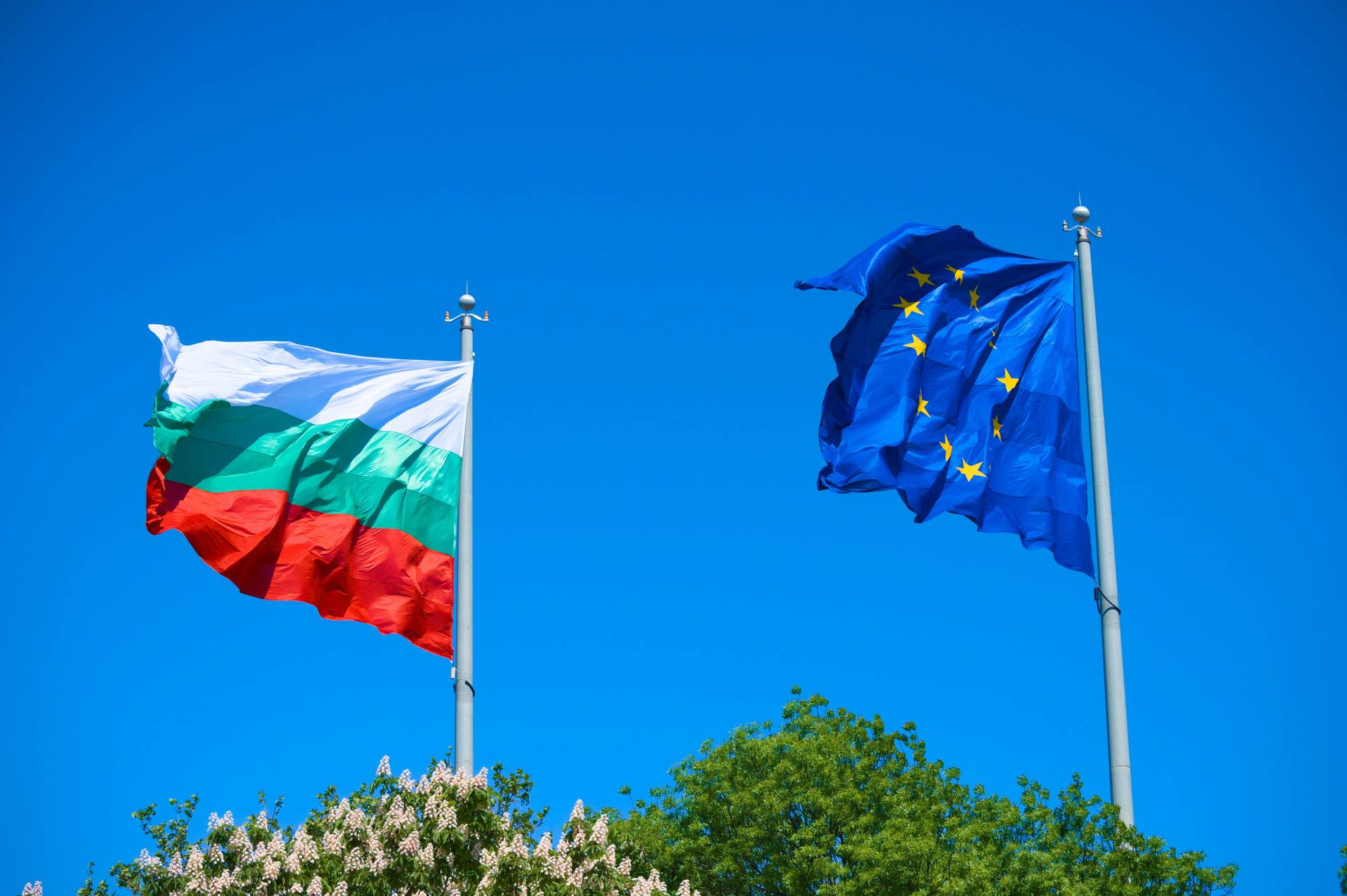
Does Bulgaria fit your situation?
The answer follows from four things: where you live, how your business actually operates, what you want to achieve, and which questions need a specialist adviser. You can answer the first three yourself — the fourth is why this page never claims to be advice.
Compare providersThis page is not legal or tax advice and does not sell any. It orders the questions that come before the decision.
Last editorial review: 2026-07-26 · Tax and legal rules change. This page is reviewed regularly — it still does not replace individual advice.
What we can confirm
Bulgaria levies corporate income tax on company profits at a flat rate of 10%.
OfficialThe formation itself requires neither residence nor a residence permit in Bulgaria.
OfficialWithin the EU, social-security coordination rules apply: in principle you are insured in one member state only.
Official
What depends on your situation
Where your Bulgarian company's profits are ultimately taxed depends on your tax residence, the place of effective management and the applicable double taxation treaty - and that is assessed by the tax authority of your country of residence.
Which country you are insured in depends on where you live and work - that is an individual case and should be checked.
These turn on your own circumstances - a website cannot answer them, and neither do we: that needs a tax adviser or the responsible authority.
Compare the providersSources and verification
How we verify →The statements this page relies on, each labelled with where it comes from. The superscript number refers to the source list below.
- Editorially reviewed
- Sources
- 0 of 5 statements checked against the primary source
5 statements are still awaiting a check against their primary source.
Statements on this page
Bulgaria levies corporate income tax on company profits at a flat rate of 10%.1, 2
Source check outstandingThe formation itself requires neither residence nor a residence permit in Bulgaria.2, 3
Source check outstandingWithin the EU, social-security coordination rules apply: in principle you are insured in one member state only.1, 4
Source check outstandingWhere your Bulgarian company's profits are ultimately taxed depends on your tax residence, the place of effective management and the applicable double taxation treaty - and that is assessed by the tax authority of your country of residence.1, 5, 6
Source check outstandingWhich country you are insured in depends on where you live and work - that is an individual case and should be checked.4, 5, 6
Source check outstanding
Show sources (6)
- 1.
National Revenue Agency (NRA)Authority
Responsible for corporate income tax, personal income tax, VAT registration and social-security contributions.
Open source → - 2.
State Gazette (Darzhaven vestnik)Legal basis
The official gazette. Bulgarian statutes - the Commerce Act, the Corporate Income Tax Act, the Personal Income Tax Act, the VAT Act - apply in the version published there.
Open source → - 3.
Registry Agency (Commercial Register)Authority
Keeps the Commercial Register. A Bulgarian company comes into existence on entry there, and annual financial statements are filed there.
Open source → - 4.
EU legislation (EUR-Lex)Legal basis
The legal basis for cross-border matters: the VAT Directive, social-security coordination, euro adoption.
Open source → - 5.
The tax authority of your country of residenceDeciding body
Assesses your personal tax liability, the place of effective management and how the double taxation treaty applies. That assessment is not made by Bulgaria.
No public address - this source is either us, or a body that decides case by case.
- 6.
Accounting and legal partnersProfessional partner
Professional assessment from Bulgarian accounting and law firms Start in BG worked with up to August 2026. Such an assessment is not an official ruling and does not replace individual advice.
No public address - this source is either us, or a body that decides case by case.