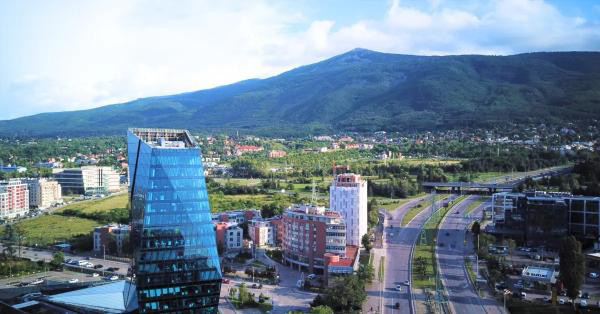
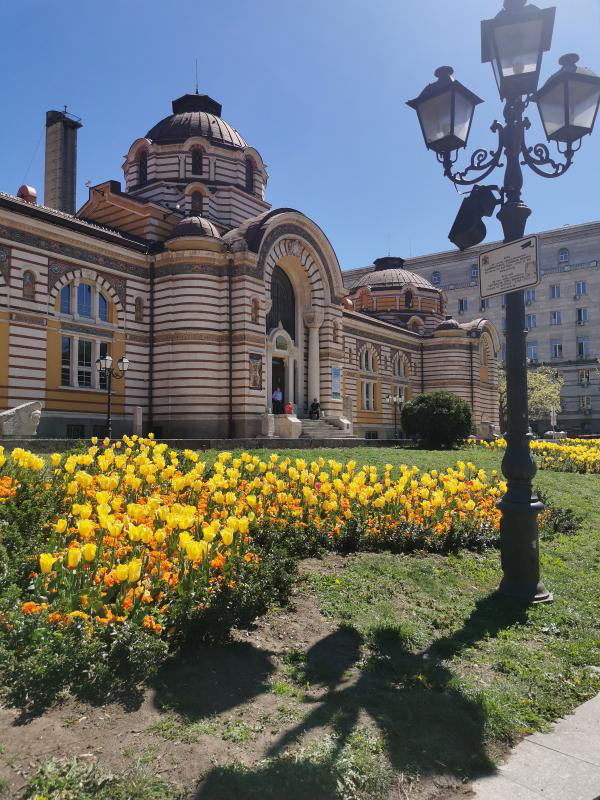
In this interview Tatjana and Jérôme of auswanderung-bulgarien.de share what they learned about moving to Bulgaria. This is part 2 of the series: their route from choosing Sofia through bureaucracy and tax to daily life, community and concrete advice for people starting out.
From Cyprus to Sofia — how the decision was made
The trigger was not frustration with Germany but appetite for something new. After a first stop in Cyprus — sun, sea and tax advantages — they noticed fairly quickly that the heat, poorly insulated buildings, thin winter flight schedules and everyday logistics (electronics, shipping, bank accounts) did not work for them long term. A workation in Bulgaria changed things: attractive tax, varied landscape, big-city energy in Sofia and lower costs decided it. For Tatjana, shopping and a broad cultural offer mattered too — plus the Balkan position, with quick trips to Greece or Serbia.
First impressions: parks, restaurants and fast internet
What stood out positively was how open and helpful people were, including towards foreigners. Living costs are noticeably lower, the mix of city and nature works, and summer brings a constant run of events. The initial challenge was language: Cyrillic script and Bulgarian generally are often unavoidable outside Sofia, though translators — or in Tatjana's case Russian — make much of it easier. Day to day they benefit from fast internet, good shopping, a lot of green space in the city and straightforward private medical care. The downsides? Uneven pavements in places, widespread smoking, and language barriers away from the capital.
Community and the nomad scene
Connections came quickly through regular meet-ups, international friend groups and an active nomad scene. The highlights are coworking spaces in Sofia and the Bansko Nomad Fest — networking, pitches, comedy and film nights and language exchanges at close to weekly intervals. Compared with Cyprus, they find the community in Bulgaria more open and more international.
Bureaucracy, tax and company formation — what actually helps
The biggest hurdle at the start: language and formalities. Their recipe was to work early with lawyers, tax advisers and sworn translators. Registration, the residence card ("lichna karta") and the company formation then ran smoothly; once the setup is done, daily life is surprisingly unbureaucratic.
On tax, the headline numbers are 10 % income and corporate tax and 5 % on dividends. What matters alongside them is substance (not a letterbox), residence and centre-of-life rules, social contributions with their low minimum bases, and a structure that actually avoids double taxation. Anyone moving out with a German corporation should keep exit taxation in view. The longer-term goal is permanent residency after five years. We go through the residence-and-management question in detail in company in Bulgaria, residence in Germany.
What they do
Through MediaForgePro OOD Tatjana and Jérôme offer project, marketing and product management, serve long-standing clients without a permanent staff, and run an Airbnb in central Sofia. Out of their own experience they also built an online course for founders, self-employed people and families: the order in which the steps come, which documents are needed, how flat-hunting, opening an account and finding doctors and schools work in Sofia — plus vetted contacts. That is their description of their own product; we have not audited it and take no commission on it.
Housing and property: check, check, check
On renting or buying, both strongly recommend professional support — most contracts are in Bulgarian and Cyrillic. Before a purchase, debts and encumbrances should be checked in the register, and location, infrastructure and realistic resale value assessed. The rule of thumb: the better the jobs, shopping and transport links, the more stable the value. Outside the cities provision is thinner, which is part of why most Bulgarians live in urban areas — more than a fifth of the population lives in Sofia alone.
Culture and integration
Sofia is manageable for expats without Bulgarian, though basic knowledge helps at offices and markets. Tatjana's Russian eases both office visits and learning the language. On the whole both feel safe, connected and at home in the urban routine — the gym, restaurants, an international circle of friends.
Looking ahead
The plan is straightforward: stay in Sofia, grow the business, start new property projects, keep travelling — and help other people make the move in a structured, low-stress way.
Three quick pieces of advice
Test daily life: spend time on the ground, in different cities and different seasons.
Work with professionals: bring in lawyers, tax advisers, translators and agents early.
Plan financially: reserves, milestones and a rough timeline give you room — plus conversations with people already there.
Note: this interview reflects Tatjana and Jérôme's personal experience. Nothing here replaces individual legal or tax advice.
Read part 1 — who is behind the site — and part 3 on everyday logistics.
FAQ: moving to Bulgaria
Who does a move to Bulgaria suit?
Moving your centre of life to Bulgaria is usually motivated by quality of life, costs, climate, entrepreneurship or tax predictability. It tends to suit self-employed people, remote employees, founders, digital nomads and families who value urban infrastructure such as Sofia's.
Which city is the best starting point?
For most newcomers, Sofia: an international community, jobs, coworking spaces, good medical care, an airport nearby and a wide choice of flats. Coastal cities (Varna, Burgas) offer sea and summer; Plovdiv culture; Bansko the nomad scene — though it is quieter in winter.
Do I need Bulgarian, or is English enough?
English gets you a long way in Sofia. For offices, contracts and rural areas, basic Bulgarian — and the Cyrillic alphabet — helps a great deal. Budget for sworn translators and have important documents prepared bilingually.
What are sensible first steps?
Spend two to four weeks on the ground, testing neighbourhoods, daily life and seasons.
Check the legal and tax position (residence, the double-tax treaty, social insurance).
Organise a residence and a bank account.
If needed: form a company, sort insurance, and find doctors and schools.
How does residency work?
EU citizens register their residence and apply for a residence card, showing an address and sufficient means or health cover. Allow time for appointments, translations and evidence. Long-term residency follows after several years.
Which company forms are typical?
For solo founders and small teams: EOOD (single-member) or OOD (multi-member). Both give a clear liability structure and lean administration. What matters is real substance — an address and actual business activity, not a letterbox.
What is the tax position?
10 % income tax and 10 % corporate income tax
Dividends to individuals generally 5 %
VAT: 20 %, with exceptions
Check the double-tax treaty, German exit taxation and your social insurance obligations. Individual advice is worth the money here.
Health insurance: private or statutory?
Both are possible. Many expats start privately, for fast appointments and English-speaking doctors. Check the scope of cover: emergencies, pregnancy, dental work and international coverage.
How do I find a flat?
Online portals, agents, Facebook groups and personal networks. Have contracts checked because of the language, document meter readings, and clarify service charges (heating, building management). A deposit and an agent's fee are standard.
What do I need to open a bank account?
Passport or ID card, usually a lease or proof of address, and sometimes evidence of employment or business activity. Some banks offer English interfaces and apps; compare fees and terms — our business account comparison goes through this.
What does living in Sofia cost?
Generally less than in a large German city, but it depends heavily on the district: rent and schooling drive the total. Eating out, public transport, mobile data and internet are comparatively cheap; imported goods and international brands are not.
What is medical care like?
In Sofia, very good: private clinics, short waiting times, modern diagnostics. Outside the cities the density is lower — plan for travel and appointments, and note the nearest 24/7 clinic.
Schools and childcare?
International and private schools and kindergartens exist in Sofia and Varna, with waiting lists. Ask about the language of instruction, fees, transport and curriculum, and apply early.
Driving, licences and public transport?
EU licences are accepted. Sofia's public transport is good (metro, bus, tram), and car sharing and taxis are cheap. If you drive: watch parking zones and winter tyres, and expect uneven side streets. More on getting around in taking taxis in Bulgaria.
Internet, SIM cards and remote work?
Fast and inexpensive. Prepaid SIMs are simple and fibre is available in many districts. Coworking spaces are common and the scene is active.
Buying property — what to watch?
Always do due diligence: check the land register for encumbrances, get translations, use a notary, commission a technical survey, and assess location and resale. Calculate financing and incidental costs — taxes and fees — realistically. See our property page.
How safe is Bulgaria?
In urban areas Bulgaria is considered relatively safe. Normal big-city rules apply — pickpocketing, taxi apps at night. Petty crime rises in peak tourist season.
Common mistakes?
Starting without a financial buffer, underestimating the language and the contracts, letterbox setups with no tax or social-insurance planning, judging the country on a summer visit alone, and buying property too fast.
What is a realistic timeline?
Two to three months of preparation (a scouting trip, advisers, documents), one to two months to arrive (flat, account, registration), and a further two to six months for the rest — language, network, schools.
Where do I find community and support?
Meet-ups, international Facebook groups, coworking spaces and events in Sofia, Plovdiv and Bansko. First-hand accounts help most; so does talking to people who made the same move a year ahead of you.
Moved from Bansko to Sofia? Depending on your residence status there are one or two authorities to notify – and the order is not arbitrary. Which deadline runs, why the municipality comes before Migration, and what this typically fails on.
Only the owner signs – the tenants do not, and they do not have to go to the notary either. What belongs in the declaration, which notarisation type matches which status, and why a married couple needs two originals.
Ask this in any expat group and you get three contradictory answers – and all three can be right. Why that happens, which three procedures keep getting confused, and which type of notarisation actually belongs to your residence status.